How Much Do Plumbers Make?
According to the U.S. Bureau of Labor Statistics, the median annual wage for plumbers, pipefitters, and steamfitters was $63,800 nationwide in May 2025. In the San Antonio-New Braunfels metro area, the median was $58,180, or $27.97 per hour, based on BLS 2025 wage data.
Those medians include plumbers at every stage of their careers, from first-year apprentices to licensed master plumbers. Pay in this trade grows with your hours, your license, and the work you take on. This guide breaks down what plumbers earn in San Antonio, what moves pay up over time, and how a six-week hands-on plumbing program at Tradecraft Schools in San Antonio can help you start building those hours with the fundamentals already in your hands.
The Short Answer: A $58,180 Median in San Antonio
The U.S. Bureau of Labor Statistics (BLS) reports that the median annual wage for plumbers, pipefitters, and steamfitters was $63,800 nationwide in May 2025, or $30.67 per hour. Locally, BLS 2025 wage data puts the median for the San Antonio-New Braunfels metro area at $58,180 a year, or $27.97 per hour.
A median is the midpoint. Half of workers earned more and half earned less, and the figure includes plumbers at every stage of their careers, from first-year apprentices to licensed master plumbers. These numbers describe the occupation as a whole, not what any one person will earn when starting out.
Plumber Pay in San Antonio, From Entry Level to Top Earners
The BLS also breaks local wages into percentiles, which shows how pay spreads out across experience levels in the San Antonio-New Braunfels area.
| Percentile | Hourly | Annual |
|---|---|---|
| 10th percentile | $17.91 | $37,240 |
| 25th percentile | $22.23 | $46,230 |
| Median (50th) | $27.97 | $58,180 |
| 75th percentile | $32.94 | $68,510 |
| 90th percentile | $37.76 | $78,530 |
Plumbers, pipefitters, and steamfitters, San Antonio-New Braunfels, TX. Source: U.S. Bureau of Labor Statistics 2025 wage data, published by the U.S. Department of Labor through O*NET OnLine.
People new to the trade typically start toward the lower end of this range while they learn under a licensed plumber. The upper percentiles generally reflect experienced, licensed plumbers. Actual pay depends on the employer, the type of work, your license, and local market conditions.
What Affects How Much a Plumber Makes
Your license. In Texas, plumbers are licensed by the Texas State Board of Plumbing Examiners (TSBPE). Most people start with apprentice registration, then work toward the Tradesman Plumber-Limited license at 4,000 hours, the Journeyman Plumber license at 8,000 hours, and eventually the Master Plumber license. Each step expands the work you're allowed to do, and that added responsibility is a big reason pay tends to climb with experience.
Where you work. Plumbers work for contractors, builders, facilities, and government agencies. According to the BLS, the national median wage in May 2025 was $71,660 for plumbers in government and $63,010 for those working for plumbing, heating, and air-conditioning contractors.
Your hours. Most plumbers work full time, and the BLS notes many work nights and weekends or take on-call shifts for emergencies. A burst pipe doesn't wait for Monday morning, and plumbers who take those calls often have more chances to pick up extra hours.
Is Plumbing a Stable Career?
Every home, restaurant, school, and hospital depends on working plumbing, and that work can't be shipped overseas. The BLS projects employment of plumbers, pipefitters, and steamfitters to grow 7 percent from 2025 to 2035, much faster than the average for all occupations, with about 42,000 openings each year on average. Many of those openings come from experienced plumbers retiring or moving into other work.
How to Start Earning in the Trade
The hours toward a Texas plumbing license only start counting once you register as an apprentice and go to work under a licensed plumber. You can register with no experience and learn everything on the job, or you can build the fundamentals first.
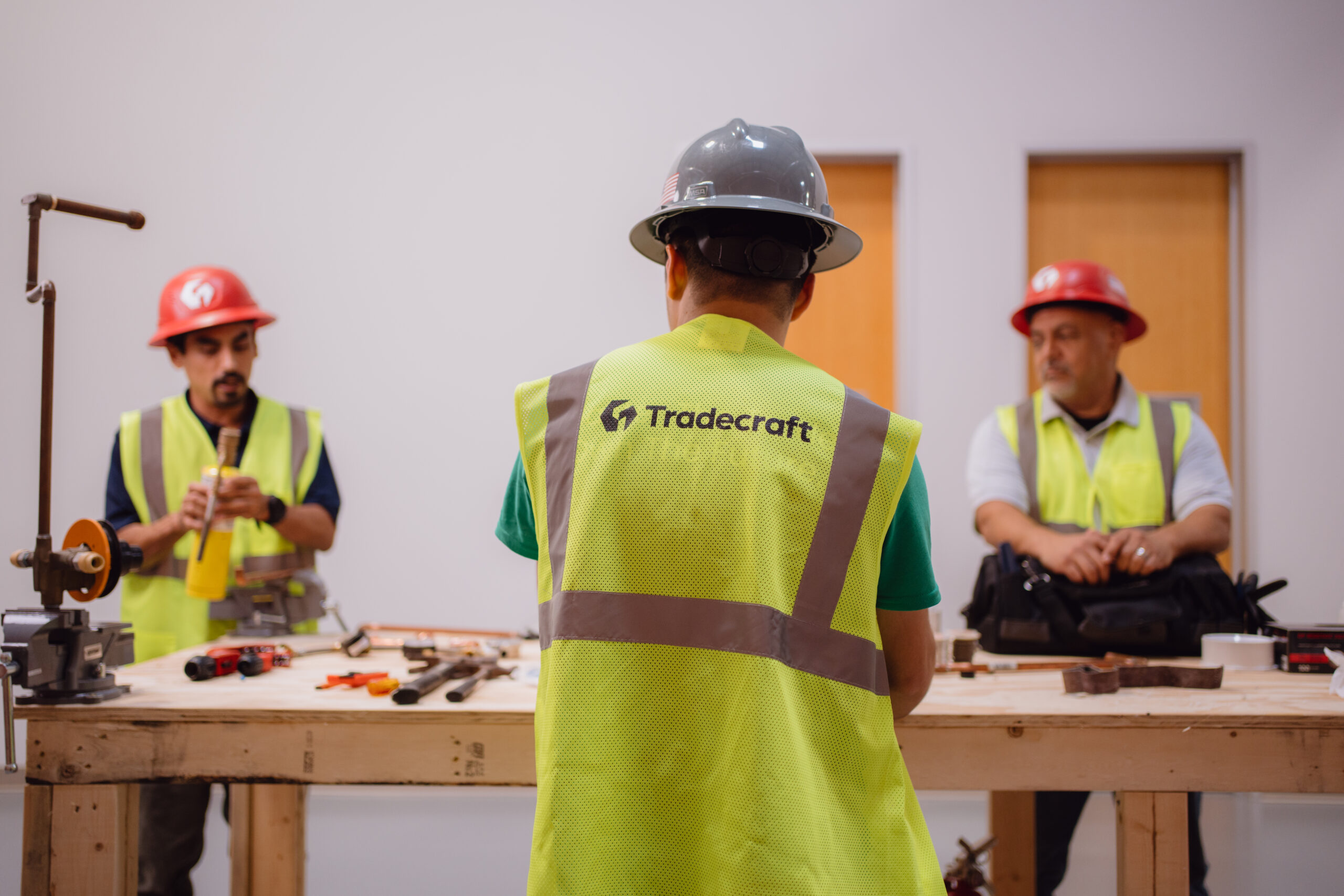
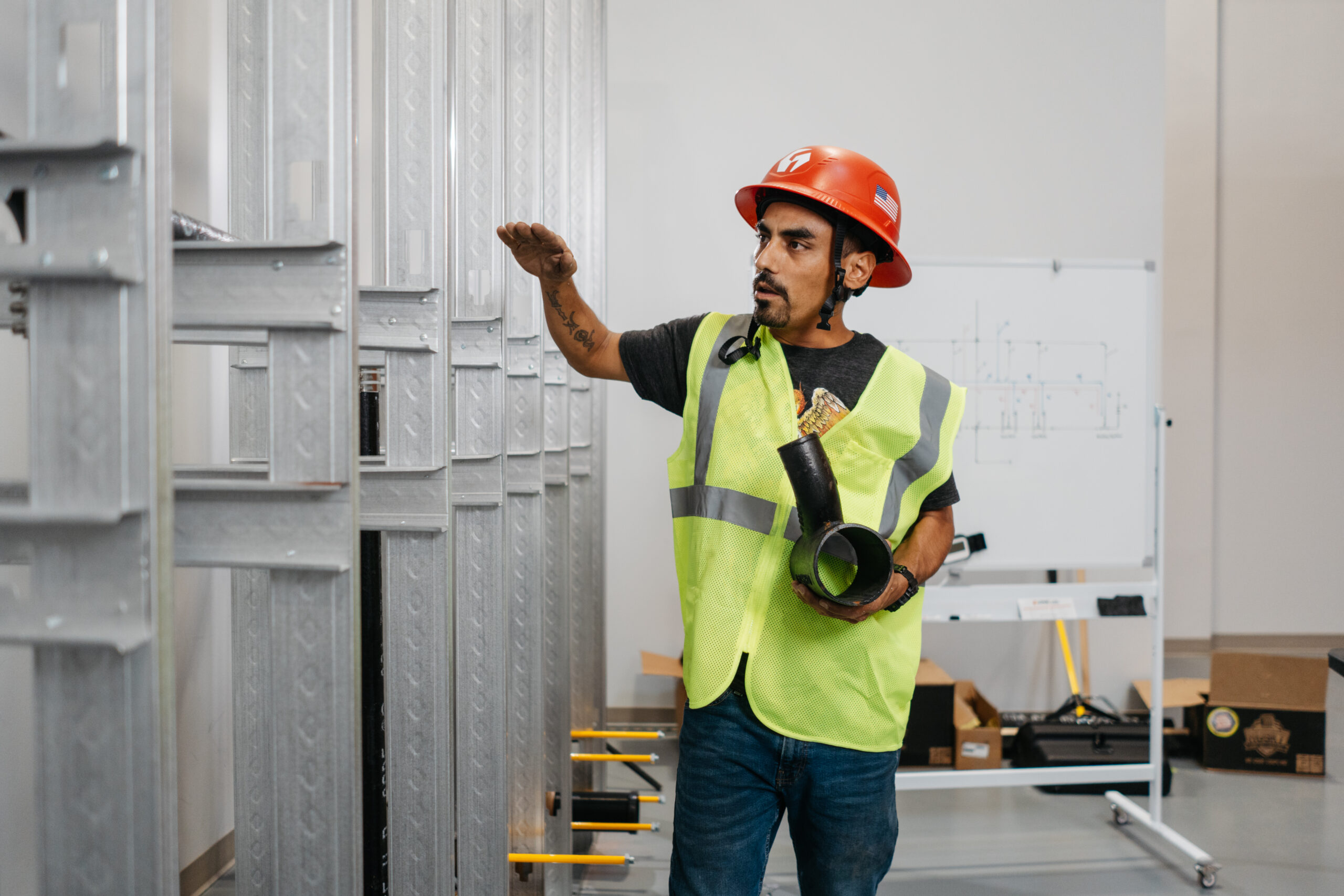
Tradecraft's six-week plumbing program in San Antonio is 240 clock hours of instructor-led training, with 175 of those hours in a hands-on lab. You work with PVC, PEX, copper, and cast iron, practice residential rough-in and trim-out, get an introduction to commercial plumbing, and earn your OSHA 10 certification. Classes run Monday through Friday from 7:00 AM to 3:30 PM. For a closer look at how it begins, read what to expect in your first week of trade school.
Career placement assistance is available to graduates. Employment is not guaranteed. Still deciding on a trade? See how long HVAC school takes or learn more about Tradecraft Schools and our instructors.
Build Toward the Pay You Want
Plumbing pay grows with your hours, your license, and the work you can take on. The first step is getting into the trade ready to learn. Six weeks at Tradecraft means you start your apprenticeship with OSHA 10, real tool skills, and lab experience instead of learning what everything is called on day one.
If you're comparing trade schools in San Antonio, bring your questions about start dates, schedules, and trade school financing to a campus tour. You can walk through the plumbing lab, meet our instructors, and sit down with admissions to map out your next steps.