How to Become an Electrician in Texas: The Ultimate Career Guide for Fast-Track Success
If you've searched how to become an electrician, you've probably noticed the same answer over and over: four to five years. That number is real, but it describes how long licensure takes, not how long until you can start working in the trade, and those are two very different dates.
This guide breaks down the actual Texas path, what the state requires at each license level, and how quickly you can start putting hours on the board. Whether you're a career changer, a recent high school graduate, or transitioning out of the military, the on-ramp to this trade is shorter than almost anyone tells you, and it starts with a $20 application instead of a two-year enrollment.

What Does It Look Like To Become An Electrician?
For most people, the question isn't really how to become an electrician. It's what the actual process looks like day to day, since most of what shows up in a search is vague: apprenticeships, years of experience, a license at the end of it. None of that tells you what you'd actually be doing next week.
In practice, it looks like training first, then work. Not two years of general education classes, not a four-year degree, just focused hands-on preparation followed by real hours on real job sites. This guide walks through what that process actually looks like, and how Tradecraft's 6-week electrical program in San Antonio fits into it.
Get Trained On Real Equipment Before You Interview
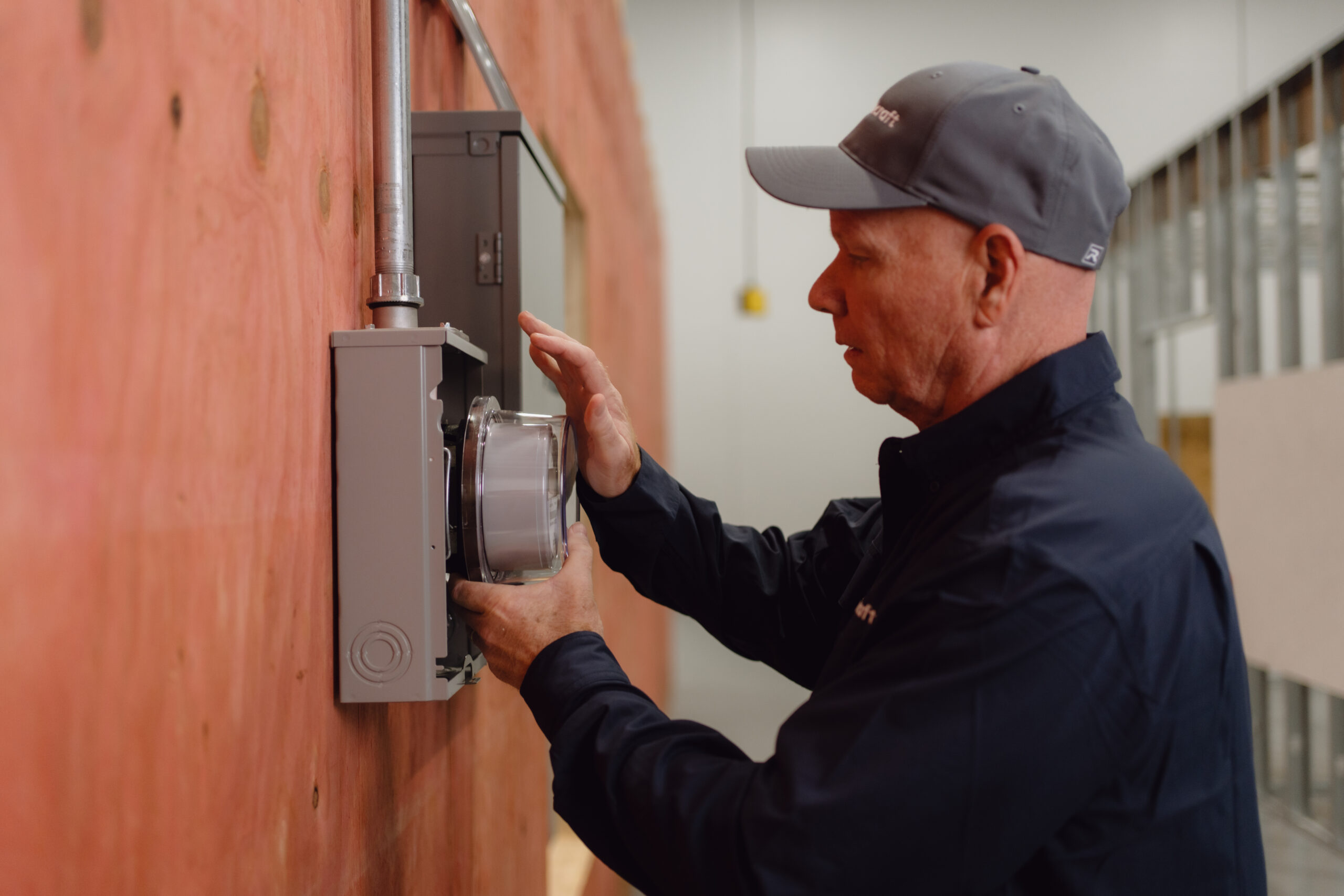
Most electrical programs bury you in theory before you ever wire a circuit or touch a panel. Tradecraft flips that. From day one you're in the lab, and classroom instruction is built around making the lab work make sense, not the other way around.
The program runs 240 clock hours over six weeks, and a little more than seventy percent of that time, 175 hours, is spent hands-on with real equipment rather than sitting in a classroom. The rest covers the theory, code, and safety training that makes the hands-on work make sense, including a full OSHA 10 certification built into the schedule at no extra cost.
The daily schedule runs 7:00 AM to 3:30 PM, with each clock hour made up of fifty minutes of instruction and a ten-minute break. That's not arbitrary. It's built to mirror a real job-site day, so the rhythm of the workday isn't something you're learning for the first time after you're hired.
By the end of week six you'll understand residential and commercial wiring, circuit installation, panel work, NEC code compliance, and electrical safety, taught by instructors who've worked the San Antonio market themselves.
How Tradecraft Condenses Electrical Training Into 6 Weeks
The electrical program runs on the same accelerated framework as every Tradecraft program: 6 weeks, 240 clock hours, with more than 70% of that time spent hands-on instead of in a lecture hall. The daily schedule, 7:00 AM to 3:30 PM, mirrors a real job site on purpose. It conditions students for the workday before they ever clock in for an employer.
Strip out the electives and what's left is the technical skill set an entry-level apprentice actually needs: safety, tools, code navigation, and enough time on real equipment that the work isn't unfamiliar the first time a contractor hands you a set of drawings. For a career changer or a service member transitioning out of the military, that's the difference between starting your hour clock this season and starting it in two years.
What You Leave With After Week Six
Tradecraft's pre-apprentice program also prepares you for the professional side of the job, not just the technical side: showing up on time, communicating with foremen, understanding job-site culture. The technical skills get you in the door. How you carry yourself is what contractors notice after that.
- OSHA 10 Certification: Required on most San Antonio job sites, and included in the program at no extra cost.
- Texas Electrical Apprentice eligibility: Recognized by TDLR.
- 240 clock hours of documented hands-on training: On the record from day one.
- Experience with real tools and equipment: Not simulations.
- Referrals to San Antonio-area hiring partners: Through Tradecraft's local employer network.
Career placement assistance is available to graduates. Employment is not guaranteed, and outcomes depend on the student, employer requirements, and local market conditions.
Where Electrical Work Happens In San Antonio
San Antonio is one of the fastest-growing metropolitan areas in Texas, and that growth shows up directly in demand for licensed electrical work. Most of it sits in three sectors.
Home construction across Alamo Ranch, Converse, Schertz, and the far North Side keeps residential wiring active year round, and rough-ins and panel installations are among the most common entry points into the trade. Commercial builds in the South Texas Medical Center, downtown San Antonio, and the logistics corridor along I-35 call for commercial crews, where conduit bending, three-phase power, and NEC compliance are the core skills, exactly what weeks four and five of the program cover. JBSA, Fort Sam Houston, and Lackland AFB rely on civilian contractors for electrical maintenance and infrastructure work, which is part of why veterans transitioning out of service often look at this sector. If that's you, ask about GI Bill benefits when you tour the campus.
Your Electrical Career Can Start Sooner Than You Think
Here's the part most trade school for electrician guides leave out: the two-year associate degree isn't required to enter this trade. Texas licensing rules don't ask for it, and no contractor is going to check for it. It became the default path because that's how community colleges are structured, not because electrical work takes two years to learn.
A large share of that time goes to general education requirements, English composition, college algebra, elective credits, none of which have anything to do with bending conduit or tracing a dead circuit. Those are months where your hour count sits at zero and your tuition bill doesn't.
Your First Step Toward Becoming an Electrician in San Antonio
San Antonio's construction boom makes it one of the stronger regional markets in Texas for electrical work. Residential development, commercial buildout, and government facilities work across the South Texas Medical Center corridor, downtown, and the fast-growing North and South Side keep demand for licensed electrical work steady, not seasonal.
Tradecraft Schools trains electricians on the same 6-week accelerated framework covered in this guide, backed by a campus in San Antonio, OSHA 10 included in the program, and financing starting at $199 a month.