What to Expect in Your First Week of Trade School
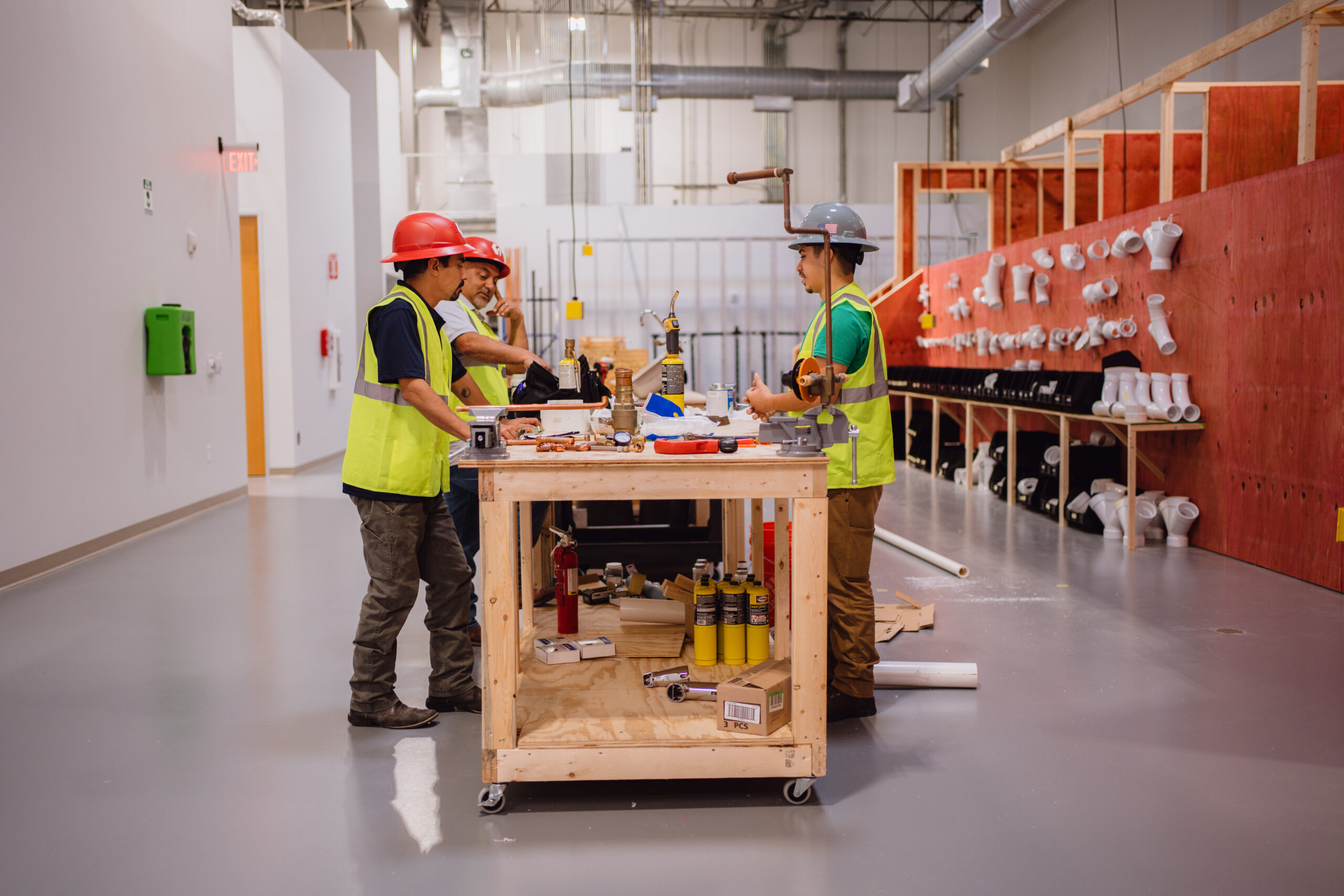
Starting plumbing school is a big step, and it's normal to wonder what the first few days will actually look like. Will you be stuck in a classroom? Will you pick up a pipe cutter right away? What if you've never worked on a plumbing system before? At Tradecraft Schools in San Antonio, the first week of our plumbing program is built around safety, tool skills, and time in the lab.
This guide walks through that first week with insight from Bobby Vidal, a journeyman plumber and plumbing instructor at Tradecraft. You'll see what happens in those first five days, how the schedule works, and how week one sets up the rest of the six-week program.
Your First Week Starts With Safety
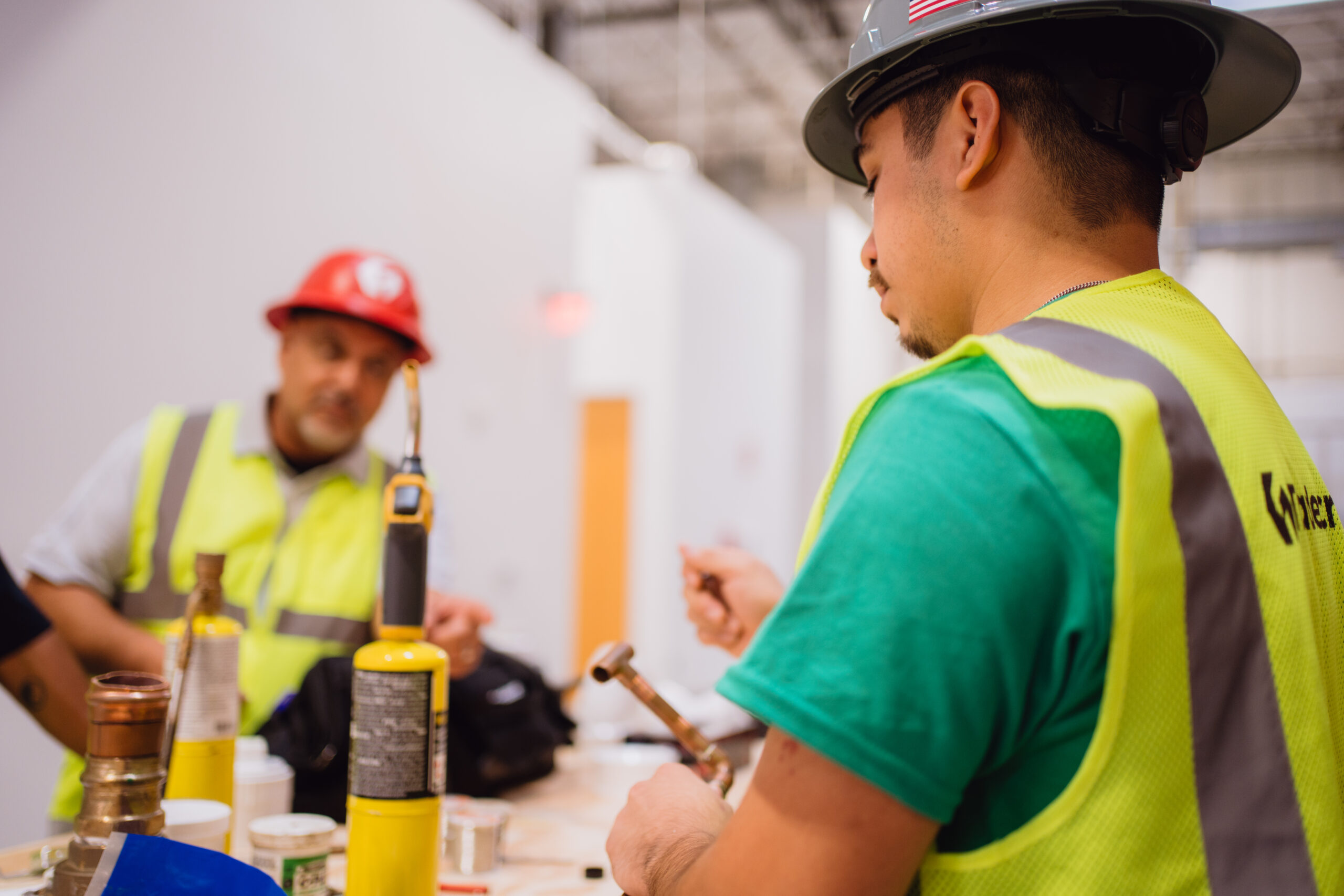
The first thing you'll learn in trade school isn't how to join copper or set a toilet. It's how to work safely. In our plumbing school in San Antonio, week one opens with personal protective equipment (PPE), jobsite safety, ladder safety, and hazard recognition. OSHA 10 training also begins that first week, so the safety habits you build early carry into every lab that follows.
Bobby Vidal, a journeyman plumber who has been in the trade since 2014, starts his students in the same place. Before anyone picks up a pipe cutter, the focus is on protecting yourself and the people working around you.
“What we're focusing on is PPE, being safe, protection.”
Bobby Vidal, Journeyman Plumber and Tradecraft Schools Plumbing Instructor
It might not sound as exciting as building a full rough-in, but it matters. Plumbing work involves sharp tools, heavy material, ladders, and tight spaces. Starting with safety means you walk into the lab knowing how to handle all of it the right way.
Then You Get Your Hands on the Tools
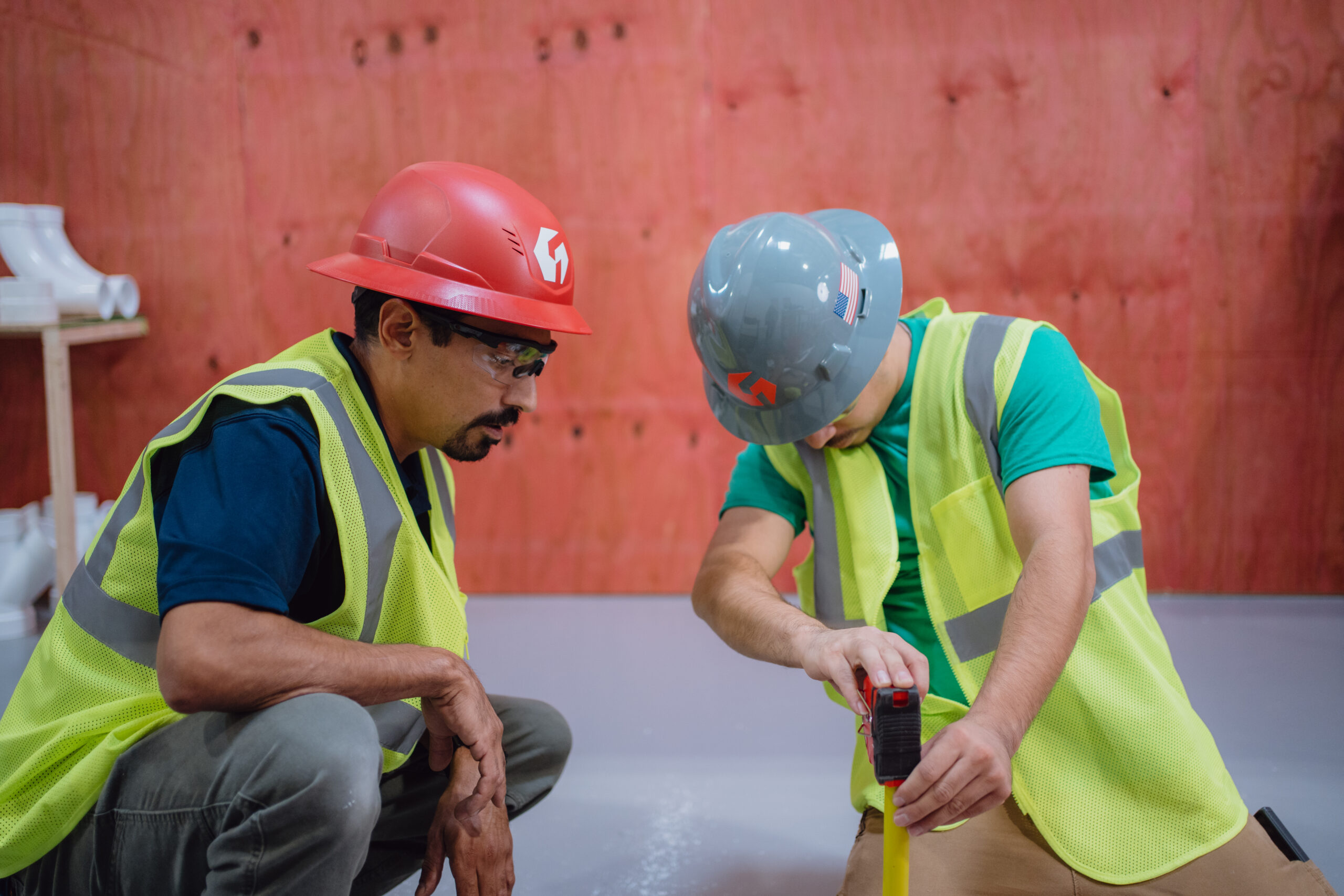
Once the safety groundwork is in place, the week moves into the lab. You'll get familiar with hand tools, pipe tools, and measuring, then work through a pipe cutting, reaming, and deburring lab. The week also covers fastening, supports, anchors, and layout, which is how pipe gets secured and positioned before anything is connected.
“After that, we get into tool handling, tool familiarity, and then pipe fittings, pipe handling.”
Bobby Vidal, Journeyman Plumber and Tradecraft Schools Plumbing Instructor
That order is intentional. Measuring accurately and making a clean, square cut sound simple, but every joint and fitting you make later in the program depends on them. Week one gives you room to practice those fundamentals before the projects get bigger.
What a Day in the Lab Looks Like
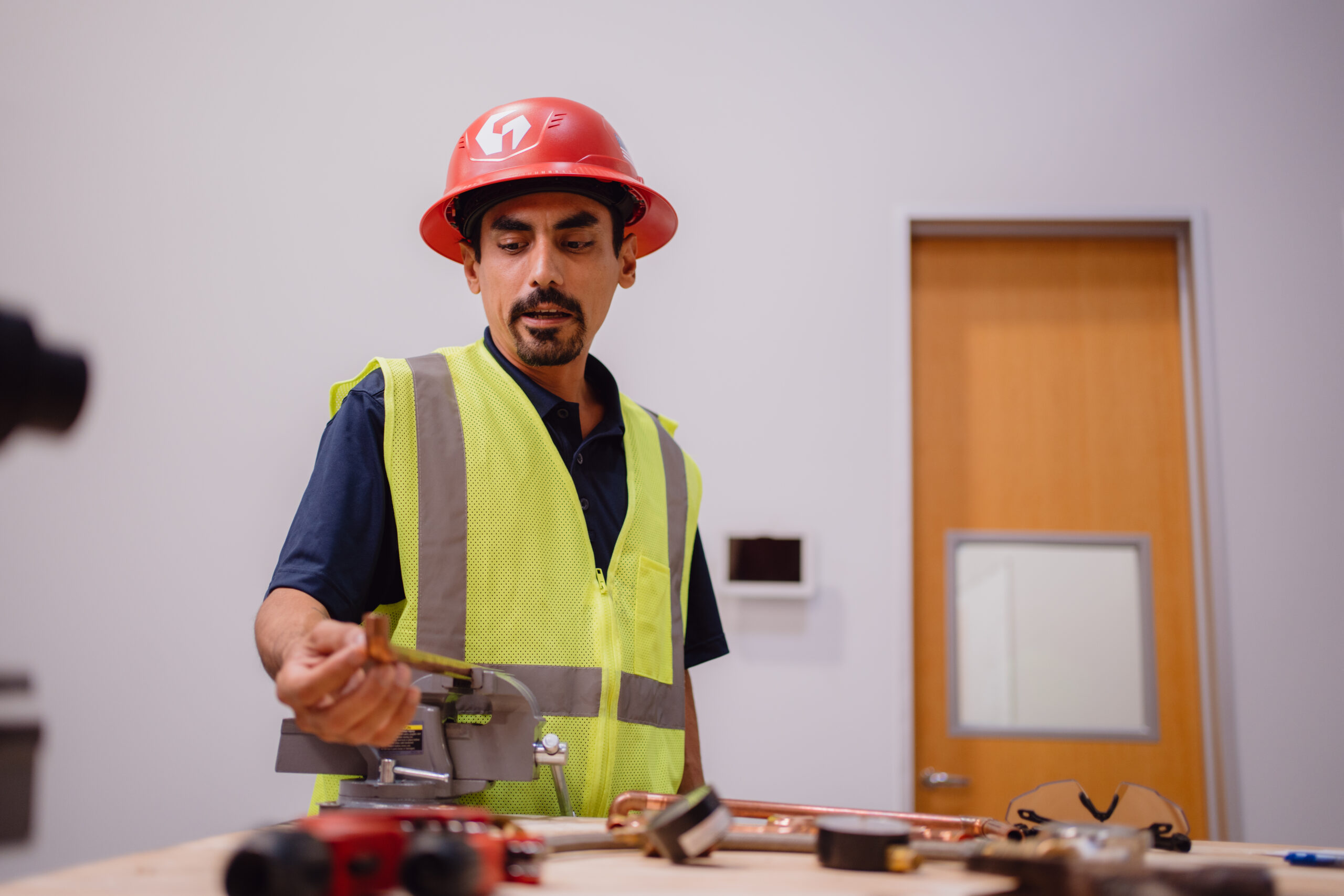
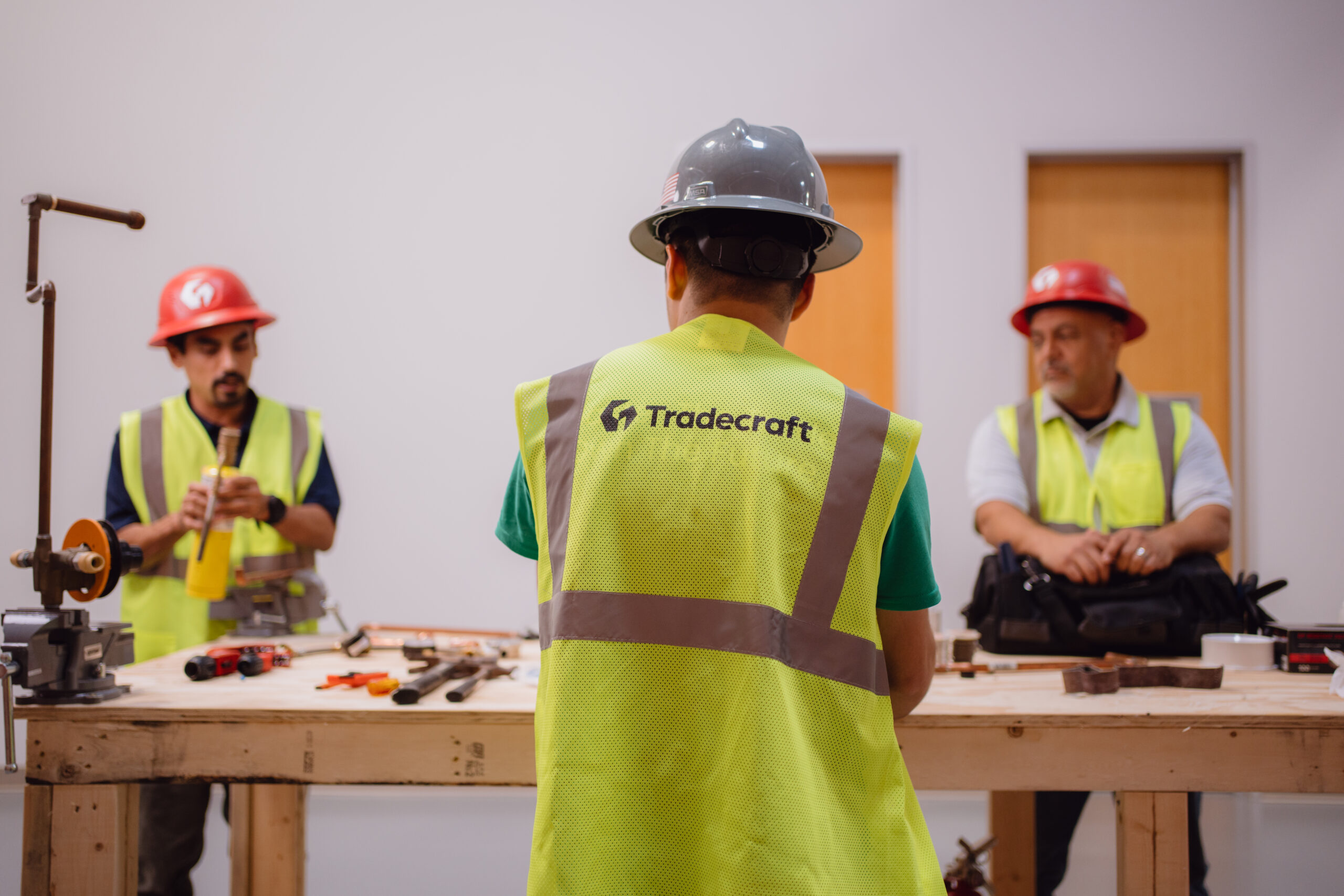
Classes run Monday through Friday from 7:00 AM to 3:30 PM, a schedule built to mirror a real jobsite day. The early start can take some adjusting, and the first week is when that routine starts to feel normal. Each clock hour is 50 minutes of instruction followed by a 10-minute break. Across the full program, 175 of the 240 clock hours take place in the lab, so even in week one, much of your day is spent working with tools and material instead of sitting at a desk.
You'll also get to know your instructors. Bobby teaches alongside Plumbing Program Director Eugene Hernandez, and the two bring different backgrounds to the lab. As one of our plumbing students shared in Day One at Tradecraft, Eugene brings commercial experience while Bobby focuses on service and residential work, which gives you more than one way to approach the same problem.
How Week One Sets Up the Rest of the Program
Every week at Tradecraft builds on the one before it, and the first week is the foundation. In week two, students move into plumbing fundamentals: drain, waste, and vent (DWV) systems, water supply, pipe types, joining methods, fittings, and an introduction to blueprint reading. Weeks three and four cover residential rough-in and trim-out, including fixture installs and leak testing. Week five introduces commercial plumbing and cast iron, and week six brings troubleshooting, a final practical exam, and career readiness.
“By the time they'll graduate, they'll have dealt with PVC, PEX, copper, cast iron, and even DWV fittings as well.”
Bobby Vidal, Journeyman Plumber and Tradecraft Schools Plumbing Instructor
The cuts you practice and the tools you learn in week one are the same ones you'll rely on when those bigger projects come up. Students who complete the plumbing program in San Antonio leave with a certificate of completion from Tradecraft and an OSHA 10 certification.
Starting in HVAC or Electrical Instead?
The first week looks similar across all three programs, with safety and tool foundations up front. In our HVAC training in San Antonio, week one covers OSHA 10, PPE, ladder and electrical safety, hand tools and gauges, an introduction to thermostat wiring, and a full HVAC system walkthrough. In our electrician school in San Antonio, week one starts with electrical theory and safety fundamentals, tool and equipment identification, OSHA 10, and reading electrical diagrams and blueprints.
If you'd like to hear it from students, three members of a recent cohort, one from each program, shared what their first week was like in Day One at Tradecraft.
How to Prepare for Your First Week
You don't need prior experience to start. Our programs begin with the fundamentals, and week one is designed with beginners in mind. A few things will make it smoother: plan your commute around the 7:00 AM start, adjust your sleep schedule before day one, and reach out to our admissions team with any questions about what to bring and wear. Most of all, come ready to ask questions. That's what your instructors are there for.
If you're still deciding whether trade school is right for you, Bobby's advice is simple.
“Come walk the lab before you decide anything. That's the whole ask.”
Bobby Vidal, Journeyman Plumber and Tradecraft Schools Plumbing Instructor
See Week One Before It Starts
Reading about the first week is a good start, but the best way to know what it will feel like is to see the lab for yourself. On a campus tour, you can walk through the plumbing, HVAC, and electrical labs, meet instructors like Bobby, and see the tools and setups you'd be working with on day one.
If you're comparing trade schools in San Antonio, bring your questions about schedules, start dates, and financing. Our admissions team can walk you through each step, so you know exactly what to expect before your first week begins.