Skilled Trades in Demand: Why the Job Market Needs HVAC, Electricians, and Plumbers Right Now
The people who keep buildings cool, wired, and running water are retiring faster than new ones are showing up. That gap is why high paying trades jobs keep climbing while entire white collar categories flatten out. If you are looking at a career change and you want work that cannot be offshored, automated, or emailed overseas, this is the moment to pay attention.
San Antonio sits right in the middle of it. New housing, commercial construction, military facilities, and a growing population all run on HVAC techs, electricians, and plumbers. Contractors here are hiring, and most of them care far more about whether you can work safely and use a tool correctly than whether you spent four years in a lecture hall.

The Skilled Trades Need More Workers
Associated Builders and Contractors estimates that the construction industry needs to attract approximately 349,000 additional workers in 2026 alone to meet demand. And the need extends well beyond new construction. Air conditioners still break. Electrical systems still need to be installed and upgraded. Pipes still leak. Homes, businesses, hospitals, schools, industrial facilities, and new developments all require trained people who know how to work with their hands and solve real problems.
That is part of what makes the skilled trades especially attractive for someone searching for high paying trades jobs and a career built around skills that remain useful year after year. The skilled labor shortage isn't just a talking point within the construction industry. The latest Bureau of Labor Statistics projections show employment growing faster than the average for all occupations across each of the three trades taught at Tradecraft.
Why Are Skilled Trades in Such High Demand?
There isn't one single reason for the skilled labor shortage. It's the result of several trends happening at the same time.
- Experienced Tradespeople Are Retiring: For decades, experienced electricians, HVAC technicians, plumbers, and other skilled workers have built careers around knowledge that takes time to develop. As more of those workers retire, employers need new people entering the trades to take their place.
- Texas Keeps Building: Texas continues to add homes, businesses, infrastructure, manufacturing facilities, and large-scale technology projects. That construction requires skilled workers.
- Technology Creates Trade Jobs Too: Technology doesn't eliminate the need for skilled trades. In many cases, it creates more work for them. Data centers, advanced manufacturing facilities, automated buildings, modern HVAC systems, electrical infrastructure, and other technology-driven developments still need people who can install and maintain physical equipment.
HVAC Technicians Are Needed Wherever People Need Climate Control
In Texas, it's difficult to imagine a more essential system than air conditioning. Homes, offices, schools, hospitals, restaurants, warehouses, and virtually every other occupied building depend on heating, ventilation, air conditioning, and refrigeration systems. Those systems also aren't becoming simpler. Modern HVAC technicians may work with electrical components, refrigerants, airflow, computerized controls, energy-efficient equipment, heat pumps, and increasingly sophisticated climate-control technology.
For someone considering an HVAC school, the opportunity isn't limited to installing residential air conditioners. HVAC training can be the starting point for careers in residential service, commercial HVAC, refrigeration, facilities maintenance, controls, installation, and other specialties. And in a market like San Antonio, climate control isn't optional. It's infrastructure.
Electricians Are Becoming Even More Important
Electricity powers almost everything around us. Homes. Businesses. Manufacturing equipment. HVAC systems. Hospitals. Data centers. Charging infrastructure. Security systems. Commercial facilities. As buildings become more connected and more dependent on electrical equipment, qualified electrical workers become even more important.
That's one reason searches for a trade school for electrician training are becoming increasingly relevant for people who want an alternative to a traditional four-year degree. At Tradecraft, electrical students begin with the fundamentals they need to understand the work environment, tools, systems, safety procedures, and practical skills they'll encounter as they enter the industry. Six weeks isn't the end of your electrical education. It's the beginning of your career path.
Plumbing Is a Career People Will Always Need
Try imagining a city without plumbers. Homes couldn't function. Businesses couldn't operate. New buildings couldn't open. Water systems couldn't be properly installed or maintained. Plumbing is one of those careers that becomes especially valuable because the problem usually can't be ignored. A broken pipe, backed-up line, failed fixture, or damaged plumbing system requires a real person with the skills to diagnose and repair it.
BLS projects approximately 42,000 openings for plumbers, pipefitters, and steamfitters each year over the next decade, with employment expected to grow 7% from 2025 through 2035. That's important context for anyone searching online for a plumbing school near me, because you're not simply choosing a training program. You're choosing the first step toward entering an industry built around solving problems that homes and businesses cannot afford to leave unfixed.
Why a 6-Week Trade School Makes Sense Right Now
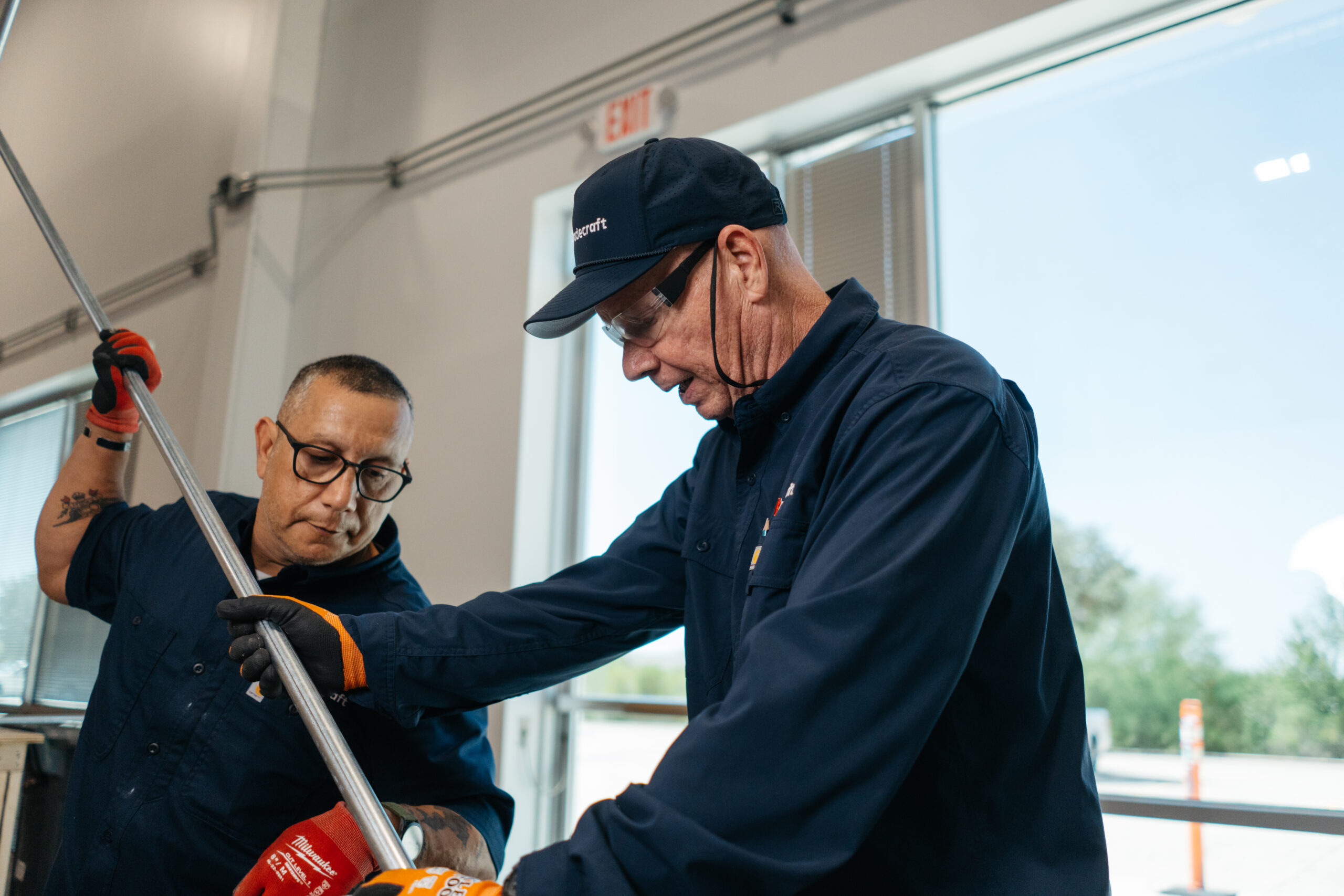
If employers need workers, spending years preparing to enter the industry isn't always necessary. That's where Tradecraft's accelerated model is different. Rather than stretching introductory technical training across multiple semesters, Tradecraft's programs are designed as an intensive six-week immersion into the trade. Students spend their time learning by doing. That matters because contractors aren't simply looking for someone who has read about electrical wiring, HVAC equipment, or plumbing systems.
Tradecraft is designed to help shorten the distance between "I've never worked in the trades before" and "I'm ready to start working toward a career in this industry."